 UWdeVST
The gliding entrance
Initial glide shapes the start of the note. A few chosen entrances can give a melody intention without constant ornament.
Give the note time to unfold.
A synthesis interpretation of the Turkish bowed lute. Initial glide, bow pressure and resonance give direction to slow themes and sustained notes.
Sales pausedVST3 · Standalone · Windows / Linux x64
Explore the interface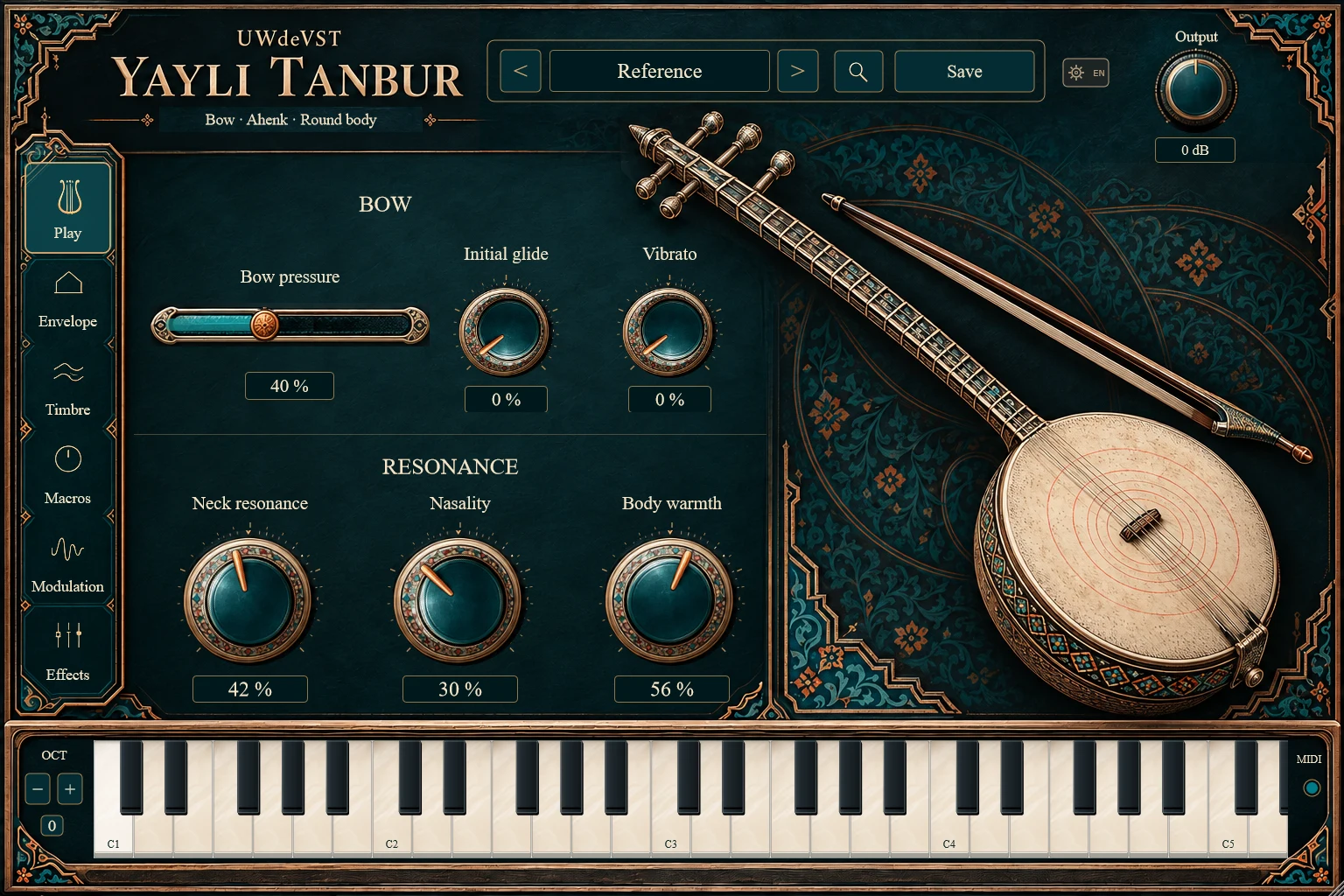
Initial glide shapes the start of the note. A few chosen entrances can give a melody intention without constant ornament.
Bow pressure and Vibrato explore emphasis and pitch movement. Hear their effect on a long note before building a theme.
Neck resonance, Nasality and Body warmth refine the lute’s colour. Find a voice that holds its place above the chords.
The audio engines have been reworked. The previous recordings have been removed while their replacements are prepared.
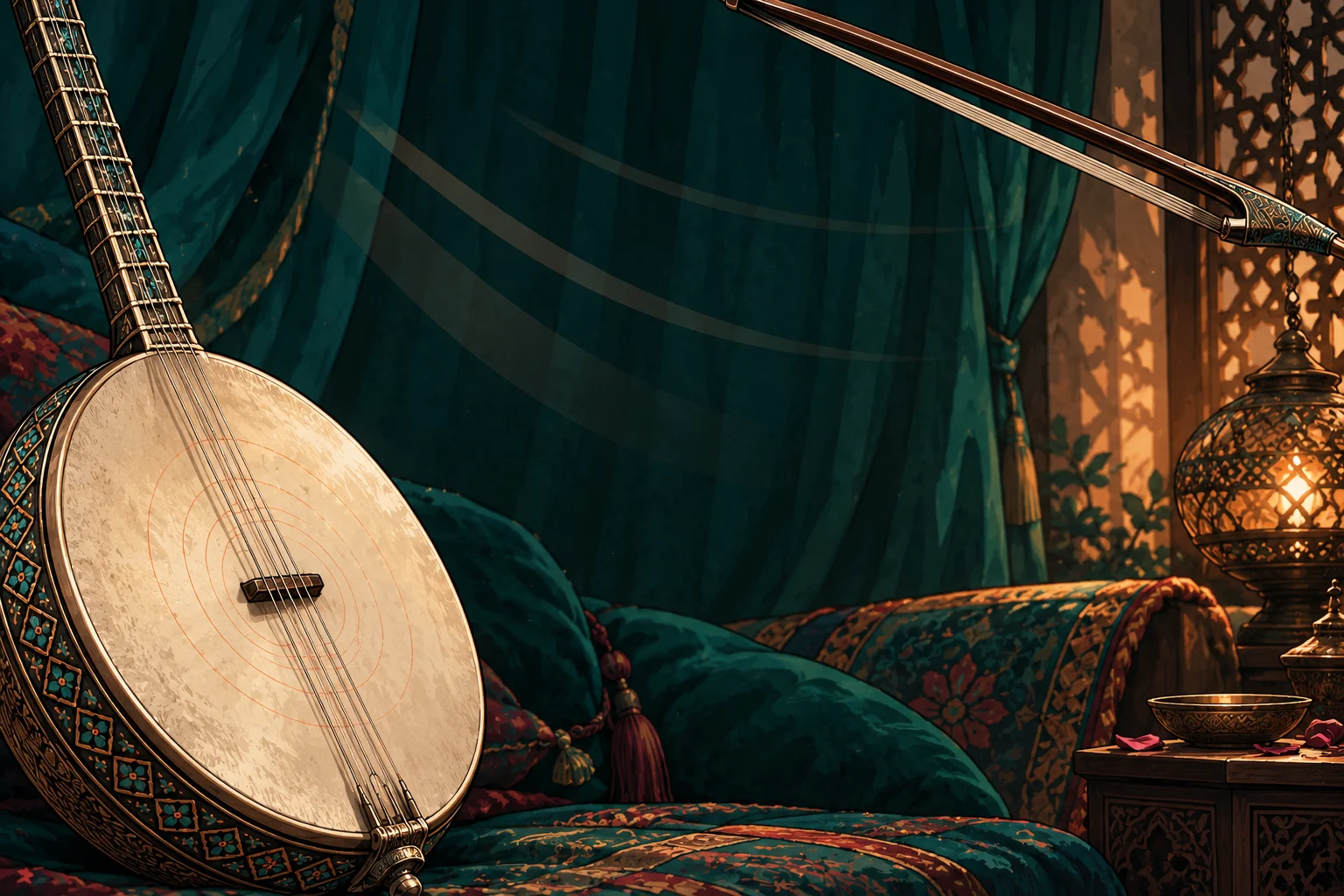
Istanbul · Turkey
A theme can say enough with a few notes when bow contact and duration carry the expression.
Place a short theme above open chords. Leave time to hear the entrance and sustain of each note.
Save glides and vibrato for the moments where the phrase needs them.
Balance reverb in the rests. A subtle electronic pulse can add another reference without covering the theme.
Explore the five native interface views, from playing controls to the final treatments.
Six controls connect the bow, the entrance of the note and the resonant colour of the model.
Initial glide shapes the gliding entrance while Bow pressure sets the contact. Try them on the first notes of a phrase.
Vibrato adds pitch movement. Let a note develop to find an amount that supports the theme.
Neck resonance, Nasality and Body warmth explore three aspects of the colour. Refine them with the chords playing.
FORMATS & WORKFLOW
BEFORE YOU START
UWdeVST / RELEASE & DOWNLOADS
Current package · 1.0.0-20261101
Instrument updates are published regularly. Find the packages available to you in your library, and subscribe to update news if you wish.
Up to 24 voices · MIDI input · digital synthesis
| System / format | Size |
|---|---|
| Linux x64 · .deb | 12.7 MiB |
| Linux x64 · .tar.gz | 14.2 MiB |
| Windows x64 · ZIP | 30.8 MiB |
Intel(R) Core(TM) Ultra 7 265KF · 31.7 GiB RAM · Windows 11 26200.
| One voice, default setting | 0.231 ms / 5.33 ms |
|---|---|
| Selected stress setting · 24 voices | 2.263 ms / 5.33 ms |
| Heavy setting · 95th percentile | 2.508 ms |
| Host + instrument · peak RAM | 23.2 MiB |
Measured processing time per audio block in an offline VST3 host, after warm-up. Three 60-second renders per case; 128, 256 and 512-sample blocks. Exposed reverb, delay, chorus, flanger and phaser controls were toggled; other processing kept its preset settings. The stress setting was selected from the programs exposed to this host. These figures describe this configuration, not minimum requirements or guaranteed real-time DAW performance.
Linux installation and dependencies checked in a Debian container. Audio hardware and Linux DAWs were not tested.
Measurement details · 1 November 2026 ↗VST3 plug-in and standalone application. Windows packages include the Microsoft Visual C++ x64 runtime. Linux builds require glibc 2.36 / libstdc++ 12 and ALSA/X11 libraries. macOS is not available.
After payment is confirmed, your instrument appears in your account. Choose the archive for your system there.
A perpetual right to use the acquired instrument under licence v2.0. No mandatory subscription or paid renewal.
For instruments in a paid order on the official website, including promotional gifts, published updates to the same instrument are included at no extra charge while distributed. No release schedule or permanent online access is guaranteed. Separate expansions and content are not automatically included.
Licence v2.0 permits personal and professional musical use within the acquired offer. The publisher claims no ownership or royalty in your original compositions and recordings, subject to third-party rights. This does not authorise redistribution of the software.
Licence v2.0 does not set a numerical maximum on computers. It does not permit sharing the software or a licence between legally distinct people or entities. See section 3 of the full licence and the terms of the acquired offer.
The terms of sale provide a normal fourteen-day withdrawal period, with no waiver required for downloading. You can submit a request from your orders or the withdrawal form. The form does not issue automatic refunds.